Showing posts with label History. Show all posts

Wednesday, March 29, 2017

Help Those Affected by the Devastating Floods in Peru

Image source
Since December 2016, rains have been beating down on Peru resulting in the worst flooding in 30 years. Mostly recently, catastrophic floods have hit northern Peru leaving hundreds of thousands affected. Piura River has flooded in banks. Having lived in Piura, I know how much rain can affect this desert. Nearly 100 people have died and 700,000 have been left homeless in 12 of the 25 regions. Thousands of kilometers of roads and crops have been swept away. Archeological sites have been affected as well which will in turn affect tourism.

Many organisations are raising money for Peru Flood Relief. Peruvian embassies and consulates are also helping out. Below you can find some places that are accepting donations.

You can also read more about the flooding at the following sites.
 

Disclaimer:

Tuesday, December 20, 2016

Trujillo - City of Culture and Contrasts

Trujillo, known as Peru's city of culture, is a lesser known city of Peru. After the capital - Lima - and Cusco, the jumping off point for Machu Picchu, there is usually a more vague notion of the other populated parts of Peru.

Lauded by the Lonely Planet, as "glamorously colonial", Trujillo is a delicious (quite literally) melting pot of culture, tradition, young,  and old.

Trujillo's Plaza de Armas is well-described, with brightly painted old colonial buildings surrounding a pristine main square, an impressive Cathedral, and palm trees swaying in the oceanic breeze.

To give a balanced account, I would have to mention the constant stream of taxis in and around the city.  There is a good and a bad side to this - when waiting more than 30 seconds for a taxi here, I find myself wondering if something is wrong...but they also contribute to the noise pollution in the city centre and many of the surrounding areas.

Since moving to Trujillo in March of this year with my family, I have often visited the centre to get a taste of 'old' Peru, as Trujillo is a fast developing city - the surrounding districts changing on an almost weekly basis as new businesses open and renovations are made.  

Most visitors to Trujillo only stop here for a few days on their way from or to Huanchaco, the fishing and surfing town about 20 minutes drive away. For these people, the historic centre of Trujillo has enough to keep them going, including a four star hotel (and plenty of hostels for backpackers).

Having lived here for 9 months now, I am still assimilating all that Trujillo has to offer. There is obviously more to the place than the centuries old buildings and the tours to the ancient ruins that tourists may add to their itinerary.

In the past ten years, so I am told, the city has expanded and developed at an incredibly fast pace - still, right now, there are apartment buildings going up all over the city.

There is a distinct culture here (one that I admittedly am still quite ignorant of) from Lima and the other cities further south - and I must do the best I can (with three children to raise) to learn about and assimilate into this culture, if my family and I are going to make Trujillo our long-term home.

The city has different personalities morning, noon, and night - completely different at night when more restaurants are open, music is blaring, and the market is bustling, compared to the morning, when it is possible to get to the centre and back in a taxi in twenty minutes. 


There are several universities in Trujillo - it is known as a university city, the buzz and energy of the young people adding to the character of the place.

Traffic here is nowhere near as bad as in Lima, but there are some spots around the city that snarl up in the early evenings.  It is around these times that the (very often) female police officers are marshalled to keep things moving, at work with a facial expression that only a woman could have.

My third son was born here in this city and his birth was registered in the Victor Larco Herrera municipal office, just metres away from the South Pacific Ocean.  

Locals are intrigued to see a very tiny Trujillano/Peruano when we are out walking locally with his Scottish and Canadian older brothers. We have been lucky to experience only very friendly and welcoming locals everywhere, who want to know why we are here and where we have come from.

Just a single glance at the local newspaper will tell you that there are the same problems here in Trujillo as there are in other cities, all over the world.

For now, I have seen just the surface of what this place is all about. There is a gravitation towards a North American culture, with two big malls of chain stores, a Starbucks in each. There seems to be a melding of cultures happening, and at the same time, something very distinct. 

Religious influences are still very strong, but subtle at the same time. Many homes display a rosary or a religious picture, while on Catholic holidays, the parks are still full and the streets busy.


From what I have seen so far, Peru is a child-loving place, and as well as open air religious festivals, children's events are everywhere, usually related to schools or nurseries, of which there are several all over the city.

And of course the weather (which is probably the factor I have overlooked the most since I got here) means so much is happening outside, all the time, every day. Just walking outside of my front door, there is a different view every day.


Alison is currently guest blogging for The Ultimate Peru List. She’s a freelance editor, writer, and craniosacral therapist. She lives in Trujillo, Peru with her husband and three sons.


Disclaimer:

Thursday, May 12, 2016

The Real Price of Gold

Image source
It's strange how our society values things that are relatively worthless and convinces people that not only do they need them, but they should pay a lot for them. I've heard of blood diamonds and decided way before I got married not to get a diamond wedding ring. Precious metals also have a dark side to them.

I recently came across this article published by National Geographic in January 2009 about the real price of gold. While 7 years old it still holds true today. It has loads of interesting subjects, such as Incas, coca, pisco, an ancient lottery system that is still used today, Quechua, shantytowns, and the impracticality of gold which makes it an interesting read. Gold is Peru's biggest export and Peru is the fifth largest exporter of gold in the world. All this comes at a price though. 

At 13 pages it is a bit of a long article, but it's thought-provoking and makes me think how first world countries take advantage of third world countries. Other countries such as Indonesia, India, China, and the US are mentioned as the history of gold is discussed. There are a number of good books about Peruvian history, such as the New York Times Best Seller: Turn Right at Machu Picchu and The Last Day of the Incas if you're interested n learning more.

Some people believe that the bubble has burst and that gold will no longer be as highly valued as it is today.Gold Bubble: Profiting From Gold's Impending Collapse discusses the history of gold and talks about what the future brings.


Disclaimer:

Saturday, September 12, 2015

Corruption Gone Wild in Peru

Someone recently sent me a link to this article which talks about political corruption in Peru. It's an eye-opening article which discusses three of the past presidents and other political figures in Peru. Although Peru has come a long way in recent years, it still has a long way to go. You can read the article at the CS Monitor or below.


Corruption gone wild? Peru's political indictments reach from top office down. From three former presidents under investigation for charges for money laundering to selling pardons, and over 90 percent of Peru's mayors accused of corruption, Peru is facing systemic corruption.

By Jeremy McDermott, InSight Crime Elyssa Pachico, InSight Crime September 10, 2014

• InSight Crime researches, analyzes, and investigates organized crime in the Americas. The views expressed are the author's own. 

One former Peruvian president is now facing charges of money laundering, another of selling pardons to drug traffickers, and a third is in prison, while a serving congressman has been linked to a Mexican drug smuggler, suggesting endemic corruption in Peru's political class.

In an unanimous vote, Congress approved a report by a congressional audit commission that proposes charging former President Alejandro Toledo (who was in office from 2001 to 2006) with money laundering and criminal conspiracy. Mr. Toledo is accused of using funds from a Costa Rican shell company in order to finance his mother-in-law's $5 million purchase of a home and office. Toledo, who has been under investigation since last year, has criticized the accusations, calling them a "political attack" as he plans to run for the presidency again in 2016.

Former president Alan Garcia (1985-90 and 2006-11) is facing possible indictment in the "narco-pardons" scandal, where he is accused of having been involved in selling pardons to convicts, including drug traffickers.

Former President Alberto Fujimori (1990-2000) is in prison, serving sentences for human rights abuses and embezzlement.

Alongside these scandals involving former presidents, a sitting congressman has found himself mired in controversy. Investigative news magazine Caretas recently revealed that a spokesperson for Toledo's political party, Jose Leon Rivera, rented a beach house to a man police say is a Mexican drug trafficker responsible for the largest seizure of cocaine ever confiscated in Peru.

While the congressman initially denied knowing the alleged trafficker, Rodrigo Torres, a police surveillance video released by Caretas purportedly shows the two meeting outside the house. After the video's release, Mr. Leon admitted that he did meet with his tenant on several occasions, but did not know of his involvement in drug trafficking.

InSight Crime Analysis 
The ongoing probe into Toledo's financial affairs may soon accompany a deeper investigation into Leon's dealings with the Mexicans. Added to this is the fact that over 90 percent of the country's mayors are under investigation for corruption and you have what appears to be systematic corruption in Peru's political world, reaching the highest levels.

Another current challenge for this Andean nation is cleaning up the pool of candidates who plan to run during the upcoming gubernatorial and mayoral elections scheduled for Oct. 5. The Interior Minister has previously said they've identified 115 candidates who are linked to drug trafficking cases, as well as 345 candidates who've already been convicted of a crime.


Disclaimer:

Sunday, February 22, 2015

Racism on Peruvian TV

From Fotolog
Peru is a melting pot of different cultures and customs, but unfortunately sometimes they clash. La Paisana (Peasant) Jacinta, was a Peruvian woman portrayed by a man. She would dress in typical Peruvian clothing. Toothless, dirty, and uneducated, she did not portray cholos (typical Peruvians) in a positive light. The character was pulled but not before people starting shaming Frequencia Latina.

You can read more about this issue at The Malay Mail Online.


Disclaimer:

Saturday, February 1, 2014

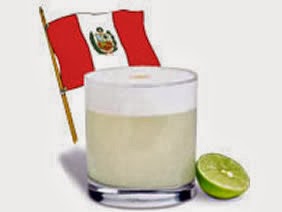
Happy Pisco Sour Day! Pisco is Peruvian! (Not Chilean)

From tierraunica.com
The first Saturday of February marks the Día Nacional de Pisco Sour, what better excuse do you need to try Peru's national cocktail? It was created in the early 1920s by an American entrepreneur called Victor V. Morris and was a take on the famous Whiskey Sour.

However, ask a Chilean about Pisco Sour and they tell you that it's a Chilean drink that was created by Elliot Stubb in 1872 in Iquique (which was then part of Peru, but is now part of Chile).

This is not something to be taken lightly as both Chile and Peru believe that Pisco and Pisco Sour is theirs. Any Peruvian will tell you "el pisco es peruano" and I'm sure any Chilean will be sure to disagree.

Nonetheless, it's a popular drink and now's the time to try it if you haven't already. IIt goes great with Peruvian ceviche (also made with the famous Peruvian lime) If you are in Peru, don't forget that learning the language is one of the best ways to learn about the culture and you'll be able to communicate easier as well.

If you're in Peru during Pisco Sour time there will be lots of festivals and competitions, such as the Pisco Sour fountain, competitions to see who can make the largest Pisco Sour, and pub crawls.

If you're in Lima, Huffington Post recommends these bars: El Pisquerito, Bravorestobar, Bar Ingles del Hotel Country Club, Hotel Bolivar, Huaringas, Rosa Nautica, Capitan Melendez, Calesa, Amor Amar and Club Nacional.

Pisco Sour Recipe (courtesy of WineMag)

It's a pretty easy drink to make and can be made all the better if you use the famous Peruvian limes.

2 ounces Pisco
3/4 oz simple syrup
1 oz fresh lime juice
1 egg white
Drop of Angostura bitters

Combine all ingredients except bitters in a cocktail shaker. Shake vigorously until the egg white is foamy (about 10 seconds). Add ice to the shaker then shake vigorously again until well-chilled (about 10 seconds). Strain into a cocktail glass. Dash a couple of drops of Angostura Bitters on top.

Want more recipes?
You can find loads of other Pisco Sour recipes as well as delicious Peruvian sides and main dishes here at these Peruvian recipes. Here's a post about other Peruvian drinks that you might like to try.


Disclaimer:

Tuesday, November 19, 2013

Cholo: Funny Nickname or Racial Slur?

I was reading Babies On the Move (the baby on the cover is from Indonesia, you can tell from the coins sewn around the basket) the other day to my daughter. It has babies around the world and how they get around. They have families from North America, Africa, Asia, and Latin America featured as well as babies being wrapped in blankets, papooses, strollers, and more.

One of the pictures in the book is of a native Peruvian and her child, typically referred to as a cholo, chola, cholito, or cholita. Short stature, ruddy cheeks, lots of layers, hats, and colourful clothes. They typically live in the mountains. You can find more about this term on Wikipedia.

I worked at a private bilingual school in Lima which had started as a German school. We went to a school in the shanty towns near Lima before Christmas and one of the little kids came up to me and asked me which country my students were from.

Even as the words were coming out of my mouth I realised the irony of it all. I told him that they were Peruvian, just like him. Yet they weren't just like him. My students were from wealthy families who could afford private schooling, trips abroad, and even therapy to help them deal with all the issues they had. They didn't even look like the children at the shanty town school since most of my students were blond-haired and blue-eyed.
 
Funny Nickname?
Peruvians tend to use a lot of nicknames rather than using given names, this is just part of the Peruvian culture. Some of them include: gordo/a (fatty), tio/a (uncle / aunt), chochera (not really sure how to translate it), amigo/a (friend). Despite my students' background and looks they commonly referred to each other as chola.

Even some of the teachers would call each other or the students chola as well. Some people are proud of their heritage as you can see by this shirt that says, "being a cholo is fantastic". Other people disagree and believe that cholo is a racial slur.

Racial Slur
Some Peruvians don't like the word cholo since it reminds them about how the Spanish came and conquered the Incas. Peruvians are still bitter about this conquest. They say the Incas were tall and strong and the Spaniards polluted their bloodline and mistreated them.

Wikipedia says that it's a racial slur. And I suppose it could be depending on the context. I guess cholo is similar to the n-word in the US. I personally would never use that since I'm not black and it would be seen as a racial slur. However, I have heard blacks using the n-word when talking to each other. Outside of Peru, cholo has become a fashion statement. Think Latin rapper style.


Disclaimer:

Tuesday, December 4, 2012

Christmas Traditions in Peru

Don't expect snow for Christmas in Peru! It'll be a green Christmas here. That doesn't stop Peruvians from drinking hot chocolate and eating paneton even though it's summer time. If you want to make traditional Peruvian hot chocolate, you'll have to use solid chocolate and add spices like cinnamon and cloves.

Some people may attend mass around 10pm on Christmas Eve, which is called Noche Buena. The main event happens on Christmas Eve at midnight when the family gathers around the table and has a feast, often with homemade tamales.

Gifts are traditionally given to children, but that doesn't stop the whole family from celebrating. If you're in the Andean, gifts aren't exchanged until January 6th, which is the Epiphany and they're brought by the Three Wise Men, not Santa Claus. Christmas trees are fake and can range from gaudy to normal. You'll certainly see it all in Peru!

Want to learn more about Christmas traditions in Peru? Check out these links!


Disclaimer:

Thursday, November 15, 2012

Visa Fees for Latin America

If you're in Peru chances are you're going to want to travel to other countries nearby. Keep in mind that you'll probably end up paying visa / entry fees. Here's some info on what those are.


Disclaimer:

Wednesday, October 10, 2012

101 Reasons to be Proud of Peru

Published in 2008, this book is a compilation of over 2500 reader responses to the question, "what makes you proud of Peru?"

Created by the team at Living in Peru this book is available in a PDF version or in print. You can find more info about how this project got started in this article or at 101Peru. It's available in English, Spanish, French, German, and Japanese.

You should also learn more about Peruvian culture if you're going to be spending time in Peru. Learning about culture and customs can help you a lot.


Disclaimer:

Friday, October 31, 2008

Cultural Centers in Peru

Updated 1 May 2017


If you're going to be in Peru you should really learn about Peruvian culture. There are a couple of cultural centres in Peru where you can study Spanish, another language, see plays, enjoy a night of music, go to art shows, or even discussions on a variety of topics.

The best way to find out about these events is to either call the cultural centre or go to their websites. Many send out free calendars of events via email or post. And all of them post their monthly events and information on their websites.

Some of the larger cultural centres, such as Britanico, ICPNA, and Alizanza Francesa charge admission for some of their events, such as classical concerts or plays. But many of the smaller centres offer free events or charge a small fee.

Peruvian cultural centres
There are a number of Peruvian cultural centers, the most famous are:

English speaking cultural centres
  • ICPNA 
  • Britanico (go to centro cultural and click on agenda cultural).

Other cultural centres


Disclaimer:

Sunday, October 12, 2008

Peruvian People and History

Updated 1 July 2012 


Peru is very diverse, here you can find many people of Chinese and European descent. Contrary to facts, some Peruvians, especially those from the mountains, are blonde-haired and blue-eyed. In bigger cities, many people will have studied English, so they might be able to help you. Reading up on the Peruvian history and culture is interesting and will help you a lot.

However, you should still try to learn some Spanish so that you can get by. You'll be treated differently than if you speak English all the time, it'll help you assimilate to Peru, and it'll be easier to talk to the immigration officers.

Please remember, that although you may be experiencing culture shock, you still need to be a respectful traveller. Read, Respectful Travel: Look Mommy, A Gringo! for more info.

Many Peruvians are short compared to North American and European standards, however, they are much thinner than a typical American. Be aware that if you’re tall you will probably stand out.

Peruvians are very open people who enjoy socializing. Family plays an important part in their lives. Some people still work 10 hours a day and may work half a day on Saturday, but this doesn’t mean that they don’t have time to relax. Personal space is much closer here, so don’t move back if people stand close to you. When meeting, men will hug or shake hands with other men. Women will give an air kiss on the right cheek when meeting men or women. Time here is flexible. For example, if you meet a friend, they will show up 15-30 minutes late. And when going to parties, people will show up about 2 hours late. If you go out with friends that they saw “te invito”, it means that they will pay for you. Don’t try to split the bill, simply pay for them the next time you go out.

In general, Peruvians are more formal and will more often than not say “buenos días” if they enter a shop or a room with people. This means that shorts and halter tops aren’t common here. You may see Peruvians wearing these types of clothes, but they will get looks, whistles and catcalls.

People here tend to get married young, and unfortunately some get pregnant first and then get married. So this means that many married couples have a few children after being married for a short time. If you’re in your mid-twenties or above and single, you’ll probably be asked when you plan on getting married. If you’re married with no children, you’ll be asked when you plan on having children.

Peruvians Abroad

History
Most people know that the Incas lived in Peru and left behind many cultural artifacts (such as Machu Picchu) and then the Spanish came and conquered them. Peruvians finally won independence because of San José de San Martín. Alan Garcia caused the economy to plummet in the 1980s and has just won re-election. Alberto Fujimori held control of the country for 10 years in the 1980s-1990s, making Peru a dictatorship. Recently they’ve had border problems with Chile and Ecuador. There are a number of good books about Peruvian history, such as the New York Times Best Seller: Turn Right at Machu Picchu and The Last Day of the Incas.  Some sites that have history are:


Disclaimer:

Friday, October 10, 2008

Safety in Peru

Updated 1 May 2014

Your opinion of the safety in Peru depends on your experiences, your physical appearance, and the way you behave. In Lima the tourist police speak English, so if you have a problem, you can call them on 3133773.

General Tips
In general, if you look and act like a gringo, you are probably at a higher risk to be robbed than those who don’t. Don’t carry your passport or lots of money with you. Same goes for credit cards or important documents. Also, don’t flaunt expensive items, such as fancy cameras. Make a copy of your passport and carry that with you if you like, though it’s not necessary. Ask the restaurant staff to get you a cab or call one. Keep bags near you. Be careful in crowds. Dress down. Do not carry all your money and ID in the same place. Make yourself bigger: swing your arms when you walk. I also hook my thumb around my purse's shoulder straps and stick my elbow out and swing the opposite arm, anyone coming too close gets elbowed or hit with my swinging arm.

Terrorism
Terrorist attacks on the USA and UK have shown use that in this day in age, terrorism can happen anywhere. Peru has a bad rapt because of some problems with The Shining Path (Sendero Luminoso and MRTA Movimiento) and Revolucionario Tupac Amaru.

They both led a number of terrorist attacks in the 80s and 90s. However, the leaders and most terrorists have been caught and have been in prison since 1992, so there is not much to worry about.

At home
Safety tends to be a concern for anyone moving to a new country. Here in Peru, homes usually have walls around them and may also have a neighbourhood security guard. Windows on the first couple of floor usually have bars on them and doors have a couple of locks. All this security does not mean that Peru is not safe. It’s just a safety precaution.

In a car / on a bus
You'll also have to be careful when you're in a car. Here are some things to remember. Put things in the trunk or under the seat. Roll up your window. Don’t buy things at intersections. Don’t use mobile while driving. If someone bumps you from behind, do not get out of your car. Go to the police station if necessary. If a police officer stops you, don’t get out of your car, insist on going to the nearest police station. You can find more safety info about transport in getting around.

Beggars
Beggars are another matter. Unfortunately, beggars are a common scene here. You will see country people, old people and children as young as 2. You can either give them money or not. If you give them money, it should only be about 10 or 20 centimos. Also, have the money ready and easily accessible, in a pocket separate from your bills. You don’t want to be taking out your wallet when you give money to beggars. If you don’t want to give them money, simply ignore them. They may follow you and pull on your clothes. Be careful of their little hands that reach into pockets.

Common Tricks
As always, it's better to be safe than sorry. Being aware of scams will help you be alert. Below are some scams that are commonly used.
  • Distractions: One scam is when someone puts something, like ketchup on you, and while you’re cleaning it off, another robs you.
  • Making you take a taxi: People will try to get you into taxis. Don't get into taxis with unknown people, no matter what they tell you.
    • I was downtown in a nice area looking for flights in travel agencies. As I left one another woman left after me. When we were outside she asked if I was looking for flights. I said yes. She said she worked for a travel agency. I asked for her card. She didn't have one with her. She then offered to take me to the travel agency in a taxi. I said thanks and walked away. 
    • Another way to get you into a taxi is posing as someone from a business. I got a call from some at my bank. She said that they were having a breakfast in order to ask me my opinion about the bank. She wanted to get info from me, such as where I lived, what I did, etc. Don't give out info over the phone, even if they say that they are from a place where you have accounts. She told me that the breakfast was free and a taxi would be provided. I then called the bank and they said they there was no breakfast. People inside the bank or company sell info to others, that's how they know you're a customer there.
  • Peasant won the lottery: Another ploy is the "ignorant peasant who won the lottery." A campesino  wanders up to strangers, carrying a note he can't read. The note says "this guy has a winning lottery ticket" or an insurance judgment, or something else that means he's going to get a lot of money...but he needs help with the bureaucracy, as he can't read. To help him make his claim, and receive a share, take him to _______ (A street address.) Don't. If you can, when you run into these people, talk to the police, security guards, or locals who can arrange to move him on out of your neighborhood.
  • Take a survey: Be sure to be street smart. Don't answer surveys on the street if they ask for personal details, or a signature.
  • Shine your shoes?: Be aware of shoe shine boys. They will charge you much more than they say and if you refuse to pay they will gang up on you.
  • ATM safety: When you use an ATM, be aware of who’s near you. Often women will try to get your card, money or PIN number. You can find more safety info about banks in money matters.
These are just some of the ploys, I'm sure there are more. Always be aware. One reason why foreigners usually fall into their traps is because they’re busy looking at the tourist attractions.

Emergency numbers
  • Fire 115
  • Police 105
  • Alcohol Anonymous 442-9412
  • Family Planning 442-7440
  • Family Violence 261-1556
  • Child Labour 261-8562

It’s also helpful to know the number of your local police station and you can find this information in Paginas Amarillas by looking under Comisaria. Your neighbourhood may also have a neighbourhood watch, or Serenazgo that you can also call in case of emergency.


Disclaimer:

Thursday, October 2, 2008

Lord of the Miracles: Mes Morado in Peru

Updated 4 July 2012

October’s known as the purple (morado) month here in Peru, due to the large number of believers who don a purple tunic for the entire month. Mes Morado is also known as the Lord of the Miracles (el Señor de los Milagros) because of an image of a black Christ that was drawn on a small hut. It was drawn by a slave and stayed up even after many people tried to get rid of it. It even survived a major earthquake when everything else around was left in shambles.

A major procession is carried out every year. Lasting 24 hour, the streets fill with devotees who come from all over Peru and Latin America to participate in this event. The procession passes by slowly as people take turns to shoulder the large heavy image weighing 2 tons, of the black Christ. Although people may only carry it a couple of steps, it’s considered an honour to shoulder the weight and people young and old can be seen carrying the Lord of the Miracles. Smaller processions are carried out in towns all over Peru as well.

In addition to prayers, hymns and processions, October also means turrones, which are a sticky sweet desert sold throughout the streets in October. Doña Pepa is the most favourite brand and well worth trying. Find out more about Peruvian food in this article. If you don’t have a sweet tooth, there are plenty of other amazing trinkets that you can find, ranging from rosaries, images of saints, candles and medallions. If you get the chance to go to the Lord of the Miracles procession, it’s definitely something that you don’t want to miss.


Disclaimer:

Thursday, June 12, 2008

Peruvian Culture

Updated 23 April 2014

Peruvian culture is absolutely amazing: from famous authors to handmade crafts, they have it all.

Architecture
In many cities around Peru, you’ll find evidence of the Spanish occupation. And colonial architecture can be found mainly in churches and cathedrals, however, you may also find preserved building in the old section of towns.

Authors
The most famous Peruvian author is Mario Vargas Llosa who was born in 1936. His first novel was The Time of the Hero. Other authors include José María Areguedas (1911-1969) who wrote Deep Rivers and Yawar Fiesta and Ciro Alegría (1909-1967) who wrote The Golden Serpent. As far as poetry is concerned, César Vellejo (1892-1938) is famous for his avant-garde poetry. You can find info about books and libraries in English books.

Cinema
There are only a handful of Peruvian actors, like Christian Meyer, who have made it to the big screen. Most of the movies shown in cinemas come from Hollywood and are shown in English. Exceptions are movies for children and those from Spain. Since burned DVD are the norm and much less than a cinema ticket (about 3 soles compared to 17 soles), many people simply buy DVD on the street and watch them at home.

You can also watch movies online at DIVX Online. It's like YouTube. The titles are in Spanish, but the movies are usually in English. There's also Cine Gratis or Justin TV, where movies are played often. It's like watching TV without the commercials.

Crafts
Alpaca wool is used to make sweater, scarves and other woolen goods. It’s expensive, but some of the finest quality you will find. Weaving is also an important craft here in Peru. You’ll also find plenty of handmade jewelry sold by street vendors.

Music
The traditional dance is the marinera. Traditional music is criolla, afro, cumbia, folkloric, and chicha. Some instruments that you may see include the cajón (wooden box), charango (small guitar) or zampoña (panpipes). Reggaton, bachata, salsa are modern music styles that you will often hear in discos. Some black music singers are Susana Baca, Eva Ayllon and Zambo Cavero. Andean singers include Manuelcha Prado and Raúl García Zarate. Jazz singers include Hijos del Sol, Wayruro and Manuel Miranola.

If you can’t move your hips like a Latino, don’t worry, gringos have a reputation for being duros, or stiff. Keep practicing, you’ll get the hang of it. Gianmarco is probably the most famous Peruvian singer to be international known. He recently won the Latin Grammy and spends time between Miami and Lima. Try looking at this music site for more info.


Disclaimer:

FTC Disclosure and Privacy Policy

html

Paperblog