Showing posts with label Tax. Show all posts

Thursday, April 25, 2013

Tax Obligations for US Expats Living in Peru


The following is a guest post by Greenback Tax Services


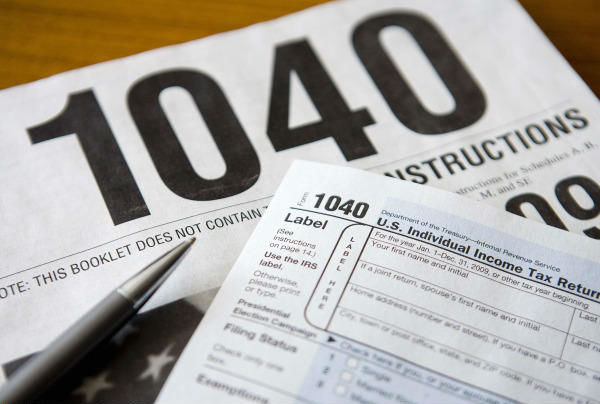
If you’ve chosen to leave the US for a new cultural experience in Peru, there are a few financial issues you’ll need to be prepared for, including new tax rules and regulations. As a US expat, unfortunately taxes tend to get more complicated when you move to a new country. Why? Because although you may be working in Peru, you are still required to file US tax returns.


As a result, you’ll need to be aware of your tax commitments in both Peru and the US.


Filing Peruvian Taxes

Taxes in Peru are filed with the Superintendencia Nacional de Administración Tributaria (SUNAT). Taxes are due within three months of the end of the previous tax year – tax years end on Dec. 31.


Resident Status in Peru

For income tax purposes, individuals in Peru are considered to be either Peruvian residents or Peruvian non-residents. The category you fall under will determine how much and what kind of income taxes, if any, you must pay.


Peruvian Residents vs. Non-Residents

In Peru, domiciled individuals, or those who are in Peru for many than 183 days (need not be consecutive) during any 12-month period, are considered residents.


Peruvian Income Tax Rates

If you are a Peruvian Resident, you are required to pay tax on your worldwide income. The amount that you pay will depend on your net income. Peru uses an Annual Tax Unit or UIT that is equivalent to PEN3,650 ($1,251.85). The income tax rate is calculated according to the following table:


Peru Income Tax Rates
UIT
Tax Rate
0 to 7
0%
7 to 27
15%
27 to 54
21%
More than 54
30%


For Non-Residents, you are only required to pay taxes on Peruvian sourced income. This is taxed at a fixed rate of 30%.


Taxable Income

In Peru, income is classified into 5 categories, which are listed below:

Cat. 1: Rental or subleasing income

Cat. 2: Capital Revenue – Interest, royalties, patents, dividends, capital gains

Cat. 3: Trade or business partnership

Cat. 4: Income from self-employment

Cat. 5: Earned income


Filing US Taxes

As a US citizen or Green Card holder, you arerequired to file a US tax return each year even if you reside in a foreign country. Fortunately, as a US expat you receive an automatic two-month filing extension.


NOTE: This extension is for filing purposes only and does not apply to any money owed to the IRS. If you owe taxes, you are still required to pay by April 15th or you may be subject to late payment penalties.


Depending on how much money you have in foreign bank accounts and institutions, you may also be required to complete FBAR Form TD 90.22.1. This form is required for individuals who have more than $10,000 (cumulative) in foreign bank accounts. This form must be filed by June 30th.


Fortunately, there are certain provisions that help prevent double taxation, including:


o   The foreign earned income exclusion, which allows you to exclude up to $95,100 of foreign earned income from your US taxes (this will increase to $97,600 for the 2013 tax year),

  • The foreign tax credit, which allows you to offset the taxes you paid in your host country with your US expat taxes dollar for dollar, and
  • The foreign housing exclusion, which allows you to exclude certain household expenses that occur as a result of living abroad.


If your income is over the minimum thresholds for filing US taxes you are required to file regardless of where in the world you live, even if you don’t owe any money.  Choosing not to file or filing late could result in late payment and late filing penalties if you owe money on your taxes.  Failure to file the FBAR can result in fines, seizure of assets or even jail time, in extreme cases.


Need Help Preparing Your US Taxes

If you’re feeling a bit overwhelmed and need some help preparing your US Tax Returns or FBAR Forms, Greenback Expat Services can help. For questions or tax preparation inquires, contact us today.


Disclaimer:

Tuesday, August 21, 2012

Basic Overview of US Expatriate Tax Requirements

The following is a guest post by I.J. Zemelman, EA. Tax Operations Director at Taxes for Expats              
                                                                             
Bottom Line:  File Your Taxes Every Year
As a US expatriate working overseas you must file your US federal taxes annually just as you would if you were living in the United States.  Why?  Because your total world income determines your tax liability – not simply the income you receive in the states.  As an American expatriate, though, you have more tax saving options than those with a stateside residence such as housing and subsistence allowance, income exclusions, foreign tax credits, and more.  Savvy taxpayers who’ve taken the time to research additional deductions and savings opportunities or who work with a tax professional may have access to even more options.  Let’s refer back to the bottom line, though:  If you don’t file your taxes you don’t qualify for such deductions and exclusions. There are lots of tax guides out there designed to help you.

How to qualify for FEIE (Foreign Earned Income Exclusion)?
In order to qualify for the Foreign Earned Income Exclusion on Form 2225 or Form 2555-EZ you only have to be a resident of another country and file your taxes in said country.  Married couples who both live overseas may file jointly.

A number of taxpayers are unclear as to what income qualifies for exclusion, and the answer is simple:  Only income earned as an employee or contractor.  Any monetary gain from dividends, interest, rental income, and other types of investment returns are not excludable from your US tax liability.  The last update to the amount US expats were able to claim as exclusion is $92,900 for 2011 and $95,100 for 2012.

Another definition it’s important to take a look at is exactly what constitutes foreign.  For IRS taxation purposes, foreign income is viewed as any income received outside of the United States or any US Territory, which include American Samoa, Guam, Micronesia, Northern Mariana Islands, Puerto Rico, and the Republic of Marshall Islands.

Before you can claim FEIE there are certain additional requirements you must meet; you will be required to have lived in a foreign country for a full year, or at least a minimum of 330 days out of a 12 month period.

Information on Foreign Tax Credits?
Tax treaties with the United States ensure that you will be not taxed twice by 2 countries for the same income.  In order to ensure you receive your foreign tax credits you must file Form 1116 if you are an individual and Form 1118 if you are a corporation.  If you still owe anything to the United States after having applied your credits, the total amount you owe should be very low.

While tax treaties are great for saving international taxpayers money, there are a few important rules and exceptions of which you should be aware:
  • Travelling Restrictions:  Some treaties become ineffective if the taxpayer travelled to a country with restrictions such as Cuba.  It is important for you to check with the State Department before travelling.
  • Tax Home:  If you are involved in a civil unrest you may qualify for an exception which allows you to claim your overseas residence as a tax home.
Note: There are a variety of other rules included in international tax treaties such as those regarding the IRS auditing process.  Filing any return begins the 3 year backtracking period to which an IRS agent can perform an audit – including international returns or returns with no taxable income.

Keep in mind that it will not behoove you to try to give false information to the IRS, as quite a few countries including Barbados, Colombia, Dominican Republic, Honduras, Jamaica, México, Trinidad, and many more have active information exchange agreements in place with the US.

If you are living overseas and you are self-employed you will be subject to all US income and SE taxes just as you would if you were living stateside.  It is important to be aware that foreign income credits CANNOT be used to decrease your SE tax liability. 

You will be protected, however, along the lines of Medicare and Social Security contributions.  The US has what is known as Totalization Agreements with multiple countries which prevent a taxpayer from having to pay into 2 social insurance systems.

Timing is Critical
American expats who are known to be working overseas or who can prove their income originated overseas will be automatically granted a filing extension to June 15th instead of April 15th.  Both military members and civilians working on overseas assignments qualify for this automatic extension. See our complete list of US Tax Deadlines for expats for more information.

Expats are also able to request a further extension and not be required to file taxes until October 15th.  This extension, however, is only for filing.  If you are an American expatriate and you owe taxes which aren’t paid by June 15th you will most likely be subject to penalties and interest.  If you are unable to pay before October you may be able to minimize your penalties by filing Form 2210.

The article is merely an overview of an overwhelming amount of US expat tax information. For additional help, please contact the experts at Taxes for Expats today or read more about taxes at these tax guides.
I.J. Zemelman, EA is the founder of Taxes for Expats
She may be reached at: +1-646-397-2887
Email: questions@taxesforexpats.com


Disclaimer:

Tuesday, June 19, 2012

Peruvians Must Pay Taxes on Their Worldwide Income

Updated 17 March 2017

The US isn't the only one that taxes its citizens no matter where they are in the world. Americans can get out of taxes provided that they fulfill some requirements and you can read more about this in the Tax Guide for Overseas Americans. If you need help with your taxes, there are plenty of tax guides out there or alternatively look into hiring an accountant who specialises in expat taxes.

Peruvians and foreign residents also have to declare taxes on money they make in other countries. Whether or not you can avoid paying taxes to Peru depends on your situation. See SUNAT for more info. In addition, having paid taxes to your home country does not exempt these funds from being taxed again.

This is the law, however, what is done in practice is different. I don't know anyone who declares their worldwide income to Peru so that they have double taxation. 


Disclaimer:

Saturday, December 6, 2008

Pay, Benefits, and Retirement Plans in Peru

Updated 1 July 2017

Pay
The average pay in Peru is $6-8 an hour, so you'll probably earn about $600-800 a month. If you don't have a budget the first thing I recommend doing is learning how to budget. You can live on $600-800 a month as long as you don't live like an expat meaning don’t expect to take taxis everywhere and eat out all the time. Look more at the following articles for info on money and budgeting.

The average Peruvian salary is around $250 a month. However, you have to remember most of them live with their family, so they are not paying rent or food. Also, they will take public transport rather than taxis, so this allows them to save money.

International Schools
International schools pay around $25,000 plus benefits, but you usually need a teaching license (qualified teaching status) from your country plus two years experience teaching in a school and you may have to sign a two-year contract. Also, if you have a legal working visa, you will be more likely to be paid more, because the school knows that you will stay for a while rather than only teach in order to get money to travel.

Earning More Money
A good place to start is buy buttons which has everything you need to know and shows you how you can do what you love while being your own boss. There's also 501 free websites you can use to make extra money in your spare time. Making extra money isn't easy. If it were, everyone would be doing it. Just look at it for what it is: extra money. If it turns into a steady income, great! If not, that's ok.

Perks and Benefits
Benefits may include transport, insurance, lunch, a housing stipend, and paid vacations. Make sure you clarify everything with your employer and sign a contract. You will usually have one month of vacation unless you work at a school, in that case you will probably get more than a month of vacations.

Some schools may put you on planilla. That means that you get an extra month salary in July and December. You also get another bonus in June, called CTS. This is an unemployment fund. You're allowed to take half of the money out every six months. If you quit or get fired, you’re allowed access to the funds after completing the necessary paperwork.

Retirement Plans
Retirement plans in Peru are called AFP. (If you're considering a retirement visa, look at this article about Retirement Visas in Peru.) Your employer should set up the fund for you. When you leave Peru or retire you can get AFP contributions back on a simple checking account. Use CPP as a reference and after 6 weeks you should get a wire on your personal checking account. Check your AFP for more details, here’s information about Integra as an example. Some of the most common ones are below.
Reference Letters
If you leave your job because you finished your contract or quit, you should get both recommendation letters and a constancia de trabajo. Recommendation letters speak well of you and your work. The constancia de trabajo should be given by the head of the company and should state whether you were full-time or part-time, the dates when you started and finished working, your title, and duties. If possible, have this put in your recommendation letter as well. Have the constancia de trabajo signed and stamped with the company seal. If you’re in planilla, when you leave your job, you’ll get liquidacion, which is basically your last salary plus a month and a half. You can also take out all the money in your CTS. Be sure to ask about this.


Disclaimer:

Wednesday, December 3, 2008

Paying Income Tax in Peru

Updated 1 November 2017

Take a look at following for basic information about paying taxes in Peru.


Disclaimer:

Friday, November 7, 2008

Residents: Leaving Peru and Tax Forms

Updated 1 July 2017


If you're a resident with a CE, then you will have to present tax forms at the border. There are two types of taxes forms: those for those who have earned money and those for those who have not earned money. More info can be found at SUNAT.

If you've earned money
  • Have your employer fill out this form if you have earned money in Peru: Form 1492 or available online as Form 1692. OR
  • Have your employer fill out Form 1073 (Peruvian Income Tax receipt). This needs to be completed, signed, stamped "paid" with the receipt for your taxes paid attached and Form 1494. This form will be provide by (Human Resources & Administration).

If you haven't earned money
  • Fill out this if you have not earned money in Peru: Form 1495. This includes children with CEs.


Disclaimer:

Thursday, September 11, 2008

Money Matters in Peru

Updated 15 April 2014

If you need info about paying taxes in Peru, please see Income Tax.

ATMs
There are ATMs at all banks. Most banks allow you to make a certain number of withdrawals a month without being charged. After that, you will be charged a nominal fee. If you withdraw money using an ATM that is not your bank, you will also be charged a fee. Paypal is good for taking out money made from abroad.

Be wary of using your home debit card in ATMs here in Peru. Some banks have agreements, but not all do. Fees are often very high, so check with your bank before withdrawing money here. ING Direct allows you to withdraw from BCP banks here in Peru, not all banks do. You could also open an ING Direct Account and then withdraw funds from an ATM without paying fees at BCP or Interbank and Global Net. Some other banks may also allow you to withdraw funds with no fees, but please check before doing so. Charles Schwab doesn’t charge ATM fees, and automatically refunds any charges from the bank where you withdraw money. They also have no monthly fees. Bank of America doesn't charge if you use Scotiabank ATMs.

Banks
Bank Accounts
Your employer can open a bank account on your behalf. To open a bank by yourself, most banks require either a DNI (National ID Document-this is for Peruvian citizens) or a carne de extranjeria (foreign resident card) plus a copy of your electricity or water bill that shows your address. Interbank and BCP will let you open an account with a tourist visa. Be aware that every time you take out or deposit money, you have to pay the ITF (tax), which is about 0.1%.

Usually there are two types of accounts: Plazo Corriente (Running) and Plazo Fijo (Fixed). A Plazo Corriente account allows you to withdraw money. A Plazo Fijo means that you shouldn’t withdraw your money for a certain amount of time which varies between one month and two years. Plazo Fijo gives you a higher interest rate. You can withdraw money from a Plazo Fijo, just ask your bank or caja if there are any penalties. Be careful of banks, as they usually charge a maintenance fee if you have less than X in your account. In my opinion, it’s much better to open an account at a “Caja”. If you want to compare different accounts in Peru (interest and cost effectiveness) try SBS.

Best Exchange Rates
  • Casinos
  • The corner of Larco and Benavides in Lima
  • Central municipal in Barranco in Lima
  • First two blocks of Huaylas in Lima
  • Larcomar in Lima
  • Moneygram
  • Petrol Stations
Budgeting
No matter where you live, you'll need a budget. Look at Creating a Budget to find out how to manage your finances. People often say that in Peru, you can leave like royalty on little money. Don't forget about saving for retirement. It's never too early to start saving, so the sooner you can start, the better. Try reading this article about saving for retirement. Lastly, you need to learn how to recognise counterfeit money.

That being said, if you wanted to, you could easily spend a fortune in Peru. Posh flats in Miraflores and San Isidro are easily $1000 and up a month. Shopping at name brand stores will set you back. Dining in alta cocina resturants, and constantly going to upscale supermarkets will leave you wondering how people can live on so little. However, if you budget and plan well, you can live on very little money a month. See Lima on $500 a month for tips and tricks.

Cajas
Earning Extra Income
Exchanging Money
XE has exchange rates as does the Banco Central. The currency used here is the Nuevo Sol.You can exchange money outside of many banks or at “casas de cambio”. If you change it outside of a bank, only use official money changers who wear vests. You’ll get a better rate than at the bank. Just be careful of counterfeit bills and double count your money before handing it over and use your own calculator. Travellers cheques are difficult to exchange here in Peru, so you’re better off simply bring cash to start off with, or withdrawing money from an ATM. If you're interested in stocks, try the Bolsa de Valores Lima.

How to Save Money in Peru
Paypal Paypal is now available in Peru. You can find more information in the Paypal article.

Transferring Money
If you want to transfer money, you could use the Banco de Credito del Peru, Western Union , Money Gram or Jet Peru (has a few offices in certain countries) Other banks or cajas may also transfer money, so please check with your home bank and bank in Peru. Xoom also works through Interbank. Paypal or Pagum (link provided by fanning. Pagum is the Peruvian version of Paypal, but can't be used for business purposes.) is good as well.

Traveller's Cheques
Some banks have high fees for cashing traveller's cheques. Interbank only charge $10, but you have to change the money into soles. Banco Continental also charges $10. Other places with low rates include Moneygram, Scotiabank and Casas de Cambios (money exchange places)


Disclaimer:

Sunday, September 7, 2008

Household Help in Peru

Updated 14 April 2014

You have to be very careful who you let into your house. If you're looking for a maid or nanny, ask around for recommendations. Lock up valuables. Also, make a photocopy of their DNI. (This is their Peruvian ID card, it's blue.) This guide on how to hire a nanny is definitely worth a read.

If you have workers come in to install or fix somethings, watch them the entire time. I've had doors installed and they only used 1 screw in each of the door brackets, when they should have used 3. That means that they pocketed the other two and the door was easy to remove.

Maids and Nannies
There are new SUNAT requirements for domestic workers, please see this thread. Many families have maids or nannies. If you are considering hiring one, please ask for references. Salary depends on the workload, minimum salary is 550 soles. (As a general rule, it's better to pay them a little higher, after all they have access to all your things. And a happy maid/nanny is less tempted to steal.)

If you expect your nanny or maid to live with you, you will have to provide them with all their meals, uniform, towels and bedding and their salary will be a bit higher. Live in maids get 24 hours off per week. Public holidays are given as well. If you need them to help you during public holidays, then you can give either extra pay or days off. Annual Compensation (CTS) is two weeks pay per year of service when they finish their service with you. Vacation is two weeks per year. Termination bonus can be paid if you wish to let them go without two weeks notice. You must also pay state health insurance and pension. Health insurance is 9 percent of their monthly salary.

The majority of nannies are not certified as they would be in other countries. They are simply women who have experience with children or young, single women who are willing to work with children. Many times they are natives from provinces. Please remember that work in hard to find in Peru and salaries are low, so be fair to your household help. Employees should be given a uniform. Maids usually use a white one in the summer and blue in the winter.


SUNAT Registration
You must register your hired help with SUNAT You need the name of the employer, their ID and utlitiy bill. This will get you a RUC, which is a tax payer’s number. Then you need the name of the employee, DNI. Also their spouse (if they are not already covered by insurance), copy of their DNI and marriage cert. If they have a common law marriage, then they need a sworn statement to this effect. If they have kids, they'll need to give you the names and birth certificates of their children.

When you leave, you must take them off your health insurance and let SUNAT know within 30 days. Monthly payment of the health insurance and pension is made with Form 1076 and you can pay it at most banks. When your employee needs medical treatment they must show a copy of the registration and a copy of the most recent paid form 1076.

Lastly, if you decide to get a new person to help you out, I strongly suggest you change all the locks. Even if you let them go on good terms, they or a family member might get mad at you and decide to get revenge by robbing you. Even if you made them return the keys, they could have easily had copies made. While it doesn't happen to everyone I know a couple of people who have been robbed when they let their employees go. So it's better to be safe than sorry.


Employment Agencies
Agencia de Empleos Boliva
Bolivar 172, Of 9, Miraflores 4442377

Baby’s Service
Torre Ugarte 268 A, Miraflores
2227386 or 9487522

Centro Evangelico de Evaluacion, Capacitacion y Comp SRL
Jr. Mariscal Luzuriaga 582, Jesús Maria
3304528 or 3327938 or 2611556

La Casa de Panchita
Av Republica de Chile 566, Jesús Maria 4245282

Construction and Repairman
Pierre Marcel (in Lima) works in the construction business. He has experience in fixing things, building furniture, painting, dry wall, carpentry, etc. He speaks fluent English, is reliable, comes on time and charges fair prices. You can contact him at pmarcel@hotmail.com or 992204138 or 988843683.

Ronald, the husband of an American expat, has 14 years of experience working with drywall (finishing and painting) in Florida. He is now freelancing here in Lima and gives free estimates and fair prices. If you are interested in building or remodeling please consider giving him a call for a quote - he is a native Peruvian but is fluent in English. Cell: 988-032-522. Nextel: 136 * 2810


Disclaimer:

Friday, July 4, 2008

Opening a Business / Getting an Investor's Visa in Peru

Updated 10 August 2016


Although there's a lot of red tape involved with any business, it's possible to open a business here and get an investor's visa. Doing Business in Peru.org is a good place to start looking for what you need. You should also read up on how to do business in Peru and Peruvian culture.

Do your research ahead of time, here's some practical advice about starting your own business

If you want to keep residency, you'll have to come to Peru every six months. If you spend more than 6 months outside of Peru and want to keep your residency, you will have to get permission from immigration. Here is what you will have to do if you want to leave for more than 183 days. You can read more info about this in Chris' blog. More first hand experience can be read in this thread.

FYI: You cannot simply invest money, never live in Peru, and get a passport. They don't have a quick and easy investment option for people who don't spend time in Peru.  

Requirements for an investor's visa.
  • Check with Immigrations does not have the the information about what is needed to get an investor's visa on their website. You're going to have to visit or call them. I got the information below from various forums and Facebook groups.  I also highly suggest you get a lawyer to help you out. 
  • Money's the first thing you will need. As of 2013, you'll need $30,000. 
  • You'll also need to hire 5 Peruvians. A Peruvian is a person with Peruvian citizenship who has agreed to be treated as a Peruvian. Let me explain. If a person holds more than one passport and they enter Peru on a foreign passport, they would not be considered a Peruvian. They'd have to enter Peru on a Peruvian passport. 
  • You'll also have to pay the minimum wage. I'm sure there are ways around it, such as commission, etc. I'm not sure if they can be contract employees or if they have to be permanent.
Another option: create your own company with you as the main shareholder
There's also another option at Peru this Week that explains how to create your own job by creating a company in which you are the main shareholder, for example in an SAC.  You should look at this step-by-step process for a SAC.

Getting help
You can also consider joining Expat Entrepreneurs in Lima. These guys organize regular face-to-face meetings where entrepreneurs share their experience and network.


Disclaimer:

FTC Disclosure and Privacy Policy

html

Paperblog