Showing posts with label guest post. Show all posts

Thursday, January 5, 2017

Internships in Peru

The following is a guest post by Nils Schulz. Nils is CEO at Inside Peru. He lives in Hamburg, Germany and visits Peru regularly.

Internships abroad are increasingly common today and there are many good reasons for that. Broad language and cultural skills are needed in many jobs if you want to succeed in a global economy. Many degree programs require at least one internship as part of the training and many students choose to go abroad. For many people their years of study are the time in their life where they are able to live abroad for a while without much hassle.

There are many ways to do so: volunteering, work and travel, taking a language course, study one or more semesters abroad, or – last but not least – doing an internship. Of course, apart from learning new skills and testing possible future career paths, a given time abroad always enriches ones personality and leaves you with many new experiences, memories, friends, ideas…

At Inside Peru, a placement agency from Germany specializing in Peru, we notice that Peru is also a place which is increasingly popular with young people from all over the world. It’s a relatively stable country with continuous economic growth (which has been a bit slower lately) and the Spanish spoken in Peru is considered to be especially “pure” and easier to learn and to understand than in many other Spanish speaking countries. But above all, Peru is just an exciting country full of colors and contrasts, perfect to discover marvelous landscapes and ancient cultures.

Yet when people start planning their stay in Peru they often encounter obstacles. How do I find the place for my internship that really fits? Why is it so hard to get in touch and they never answer to my emails? These are typical situations many have to deal with. Let alone the language barrier or concerns about security, visa matters, and the like. So reaching out to a place like Inside Peru turns out to be a good decision for many people willing to go to Peru in order to get things done well right from the start. For a modest one-time fee they get professional help planning the trip, finding the right internship and a cosy and secure place to stay. Also while staying in Peru they get follow-up assistance via Internet or with a local contact person and regular activities with other foreign interns.

Many interns going to Peru are social-minded and look for internships dealing e.g. with indigenous people or human rights matters, development cooperation or social work (working with vulnerable groups in society). But also many other work areas like law, teaching, environment or sturdy marketing and economy-related internships are asked for and provided by Inside Peru. If you are interested in a stay in Peru visit Inside Peru’s website and get in touch with us. We are happy to help. -Nils Schulz

Disclaimer:

Tuesday, June 2, 2015

The 1-2-3’s of Adapting to Life in Lima

The following is a guest post by Alan LaRue. He is the founder of the Expatperu.com website and the Webspanish.com online school. He has lived in Peru since 1995. There are a number of good books about Peruvian history, such as the New York Times Best Seller: Turn Right at Machu Picchu and The Last Day of the Incas.  

The 1-2-3’s of Adapting to Life in Lima
So, you have decided to relocate to Lima, Peru and you are doing your research to smooth your transition. Good for you! This webpage is a great source of information and I was pleased to be asked to contribute a guest post with some advice for newcomers.

I have lived in Lima for more than 20 years now, and over the past two decades I have seen countless foreigners move here, and I see how some adapted much better than others. Based on their experiences - and my own lessons learned – I´d like to offer you a few shortcuts to adapting to life here. After all, the faster you adapt, the faster you can get on with the chore of making a living, raising your kids, or just living the adventure of a new life in an exciting country, all despair of culture shock.

Step One – Do Your Research 
There are three web pages that stand out from the crowd in terms of providing advice for foreigners relocating to Peru. These are The Ultimate Peru List, Expat Peru and Lima Easy. Take some time and read all that these web pages have to offer; they are all based on personal and collective experience, and while some of the information you find might be out-dated, these three webpages are a tremendous resource.

Besides reading these pages, my advice is that you spend some time reading up on Peru´s economy. The best source I have found is the data rich Peru Business and Investment Guide. Follow the link and download the PDF: you will be amazed at how much information is included here. This guide book is chock-full of charts and graphs gleaned from the World Bank, the Central Bank of Peru, the Peruvian statistical agency INEN, and a host of other reputable sources. When you read it you will gain an overview of the Government of Peru, and the country´s geography, demographics, trade agreements, economic sectors, taxation rules, investment laws, visas, and an up-to-date directory of the main government and regulatory agencies.

Then, round off your reading with the well-written “Lima: A Cultural History”, by James Higgins. I have read dozens of books on Peru and this one stands out as one of my favorites! The book includes a brief history of Lima, a description of its modernization and change, an overview of colonial houses and monuments, an explanation of the historical center and nice descriptions of the neighborhoods where foreigners most often settle, such as Surco, San Isidro, Pueblo Libre, Callao and Miraflores.

So in conclusion: Do your research. You will feel more confident upon arrival and you will have developed some criteria to help you conduct your own analysis of your new-found home.

Step Two: Connect With People
Ask any psychologist - or your mother for that matter - and you will be told that one of the best ways to keep up your spirits is to surround yourself with friends. This holds especially true when you move to a new country or city because - besides giving emotional support - friends will give you the basic information and tips you need when settling in. With this in mind, I´d like to recommend a few networks where you can find people who want to get to know you, and who are happy to help.

Do you use Facebook? If so, the two must-joins are Expatriates in Peru and Living in Lima – Expat Support. Both have a large community of people who have already relocated to Peru. If you are an entrepreneur, you can also consider joining Expat Entrepreneurs in Lima. These guys organize regular face-to-face meetings where entrepreneurs share their experience and network. If joining a forum is more your thing, I invite you to join the Expat Peru forum (I am the founder) where you will find an archive of thousands of questions and answers.

Besides virtual communities, there are other groups where expats and Peruvians meet in an English-speaking environment. Visit the Lima Toastmasters Club and hone your public speaking skills over a hot lunch and camaraderie. For the religious minded, check out the Union Church of Lima and the Anglican Cathedral of the Good Shepherd. Both are large communities that bring together a wide mix of people from all kinds of backgrounds.

You already know that learning Spanish is a crucial ingredient to your success in Lima, but did you know that you can begin studying Spanish online with a teacher from Lima before you travel? Studying with a teacher from Lima gives you the added benefit of receiving Spanish lessons from someone who also serves as a cultural guide, and who can give you all kinds of practical advice about living in Lima. Allow me to pitch my online Spanish school Web Spanish. Web Spanish is a pioneer in offering private classes online. Opened in 2005, Web Spanish has some of the best Spanish teachers you can hope to find online.

Step Three – Get Your Bearings
One of the best things you can do in your first few weeks in Lima is to treat yourself to a tour of Lima. Clarification: I am not talking about the classic, touristic city tour, but a down-to-earth excursion where you venture into the 4 corners of Lima. Only by doing this can you fully grasp what it means to live in a city of 10 million people, and begin to understand what life if for most of the city´s inhabitants.

 This sounds daunting, but in practice, it is very doable. Taxis are relatively inexpensive here, so ask around and find a reputable driver who can give you an hourly or day rate and explain to him that you want to see Lima up and down, the good and the bad. A full-day tour should cost you around US$60, a small price to pay for such an incredible educational experience. Make sure your driver takes you up to the top of Morro Solar and the Cerro San Cristobal where you can get a bird´s eye view of the city. If you are on a tight budget, you can do the same with using the bus system, but my suggestion here is that you go accompanied by someone who already knows the city well.

Lima is full of museums - some much better than others - but for a newcomer trying to get her bearings, I´d like to recommend three. The first is the Museo de la Gastronomia. There is no other single place where you can get such a good understanding of Lima´s varied and rich cuisine. Then, there is the Cathedral of Lima, which gives you a sense of the important role played by the Catholic Church in Lima´s colonial and republican history. These two museums are within walking distance of one another and can be visited on the same day. Then, go to Miraflores and tour the Huaca Pucclana, a pre-colonial pyramid made of mud bricks with a small site museum. It´s a beautiful location and it will give you a sense of Lima´s pre-colonial history.

I hope this short guide will help you as you relocate. Lima is a fun, exiting city, but not without its challenges. Taking your adaptation process seriously will help you settle in faster and better. Good luck, and enjoy!


Disclaimer:

Friday, September 13, 2013

Changes for a New Hope: An NGO Volunteer Organisation in Huaraz, Peru

The following is a guest post by Jim Killon who runs Changes for a New Hope. Below is his story. There are many other organisations out there for people who want to volunteer in Peru.

I'm from Baltimore, Maryland. In 2009, I fulfilled a long-time dream of developing a project for the benefit of children living in a 3rd world country. I am an exhibited artist and photographer, writer/author and a social activist. I wrote an article about how volunteers have helped out. You can read the article at Volunteer Match.

The “Haz lo Correcto – Do the Right Thing” campaign in Huaraz, Peru has increased community awareness toward positive development there. I just wrote an e-book, “A Gringo in Peru – A Story of Compassion in Action,” and it has already reached readers in seven countries. You can find it on Amazon or Lulu.

Everybody wants to feel good don´t they? Everybody would like life to be a tad more convenient and manageable and in the shortest amount of time possible. And why not? After all we deserve it.

I was on a visa run to Toronto, Canada in November visiting with some wonderful friends who have supported this project for years now. While staying at their home, I was reacquainted with what has come to be strange to me because my day to day living in the Peruvian Andes is so different. Heated homes for one example. Floors with carpeting. Hot running water and a refrigerator, with food. A bed. Cars that were not 10 years old and beat up. Stores with thousands of choices and restaurants with page after page of options. Those everyday conveniences I had in my first 50 years spent in the U.S. has almost completely vanished from my memory, the impression of Peruvian living in the Andes, over the last 5 years, has replaced every nook and cranny of my thinking.

Every person´s definition of comfort is different. What makes each of us feel really great is also different. A pair of shoes that fit, warm clothing, basic hygienic supplies, soap and shampoo, deodorant and fingernail clippers are normal for most folks in developed countries. Where I live, it is barely a consideration. To have those things, for the children that we reach out to, is a luxury. But it would make them feel really good to have them.

I was able to bring back a few hundred pounds of materials and supplies into Peru for the children thanks to my Toronto friends and many others like them. This is what makes them feel good.

As good as in a fine meal at a nice restaurant or soaking in a Jacuzzi hot tub? No, it is different. It feels good on the inside, in a very special way and in a very special place in your heart. That´s how my friends and our supporters describe it to me. That is how I feel everyday, waking up in an unheated house, solid concrete walls in Huaraz, Peru. A bare light bulb hangs from the ceiling, water may or may not come out of a facet and is cold only. I adjusted, I manage, I never complain because I chose this life to be able to create the project called Changes for New Hope. I never regretted this decision. It is what makes me feel good inside, in that very special place. It is such an overwhelming feeling, the compassion and love in such a dynamic way that I generally forget the minor inconveniences that had replaced my North American life which was very comfortable.

We do what makes us feel good, gives us a sense of purpose and happiness. Some need to find it externally in some form or fashion. Others, a few unique individuals have found that special oasis of peace and tranquility and love deep within themselves by touching the lives of others who need them. Sometimes it is a post card with a message of heartfelt hope. Sometimes it is a box of materials and supplies like the ones I just mentioned. Sometimes it is a visit to help in a hands-on volunteering way. Sometimes it is funds. No matter what manner your heart is sharing, the feeling is incredible. It is real. It does´t end with a hangover, or a breakup text message or the shakes. It is a wonderful feeling of having found a purpose and it does not diminish or fade.

I invite each one of you who may be considering how to feel wonderful, deep within yourself, to try this experience, touch this piece of the world and the children who only want to feel good and share the comfort of your own heart with theirs.


Disclaimer:

Thursday, April 25, 2013

Tax Obligations for US Expats Living in Peru


The following is a guest post by Greenback Tax Services


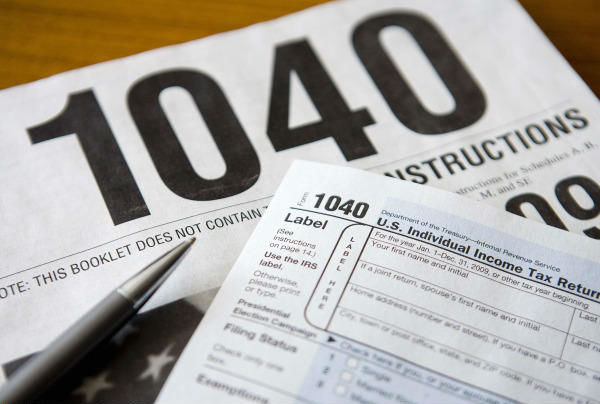
If you’ve chosen to leave the US for a new cultural experience in Peru, there are a few financial issues you’ll need to be prepared for, including new tax rules and regulations. As a US expat, unfortunately taxes tend to get more complicated when you move to a new country. Why? Because although you may be working in Peru, you are still required to file US tax returns.


As a result, you’ll need to be aware of your tax commitments in both Peru and the US.


Filing Peruvian Taxes

Taxes in Peru are filed with the Superintendencia Nacional de Administración Tributaria (SUNAT). Taxes are due within three months of the end of the previous tax year – tax years end on Dec. 31.


Resident Status in Peru

For income tax purposes, individuals in Peru are considered to be either Peruvian residents or Peruvian non-residents. The category you fall under will determine how much and what kind of income taxes, if any, you must pay.


Peruvian Residents vs. Non-Residents

In Peru, domiciled individuals, or those who are in Peru for many than 183 days (need not be consecutive) during any 12-month period, are considered residents.


Peruvian Income Tax Rates

If you are a Peruvian Resident, you are required to pay tax on your worldwide income. The amount that you pay will depend on your net income. Peru uses an Annual Tax Unit or UIT that is equivalent to PEN3,650 ($1,251.85). The income tax rate is calculated according to the following table:


Peru Income Tax Rates
UIT
Tax Rate
0 to 7
0%
7 to 27
15%
27 to 54
21%
More than 54
30%


For Non-Residents, you are only required to pay taxes on Peruvian sourced income. This is taxed at a fixed rate of 30%.


Taxable Income

In Peru, income is classified into 5 categories, which are listed below:

Cat. 1: Rental or subleasing income

Cat. 2: Capital Revenue – Interest, royalties, patents, dividends, capital gains

Cat. 3: Trade or business partnership

Cat. 4: Income from self-employment

Cat. 5: Earned income


Filing US Taxes

As a US citizen or Green Card holder, you arerequired to file a US tax return each year even if you reside in a foreign country. Fortunately, as a US expat you receive an automatic two-month filing extension.


NOTE: This extension is for filing purposes only and does not apply to any money owed to the IRS. If you owe taxes, you are still required to pay by April 15th or you may be subject to late payment penalties.


Depending on how much money you have in foreign bank accounts and institutions, you may also be required to complete FBAR Form TD 90.22.1. This form is required for individuals who have more than $10,000 (cumulative) in foreign bank accounts. This form must be filed by June 30th.


Fortunately, there are certain provisions that help prevent double taxation, including:


o   The foreign earned income exclusion, which allows you to exclude up to $95,100 of foreign earned income from your US taxes (this will increase to $97,600 for the 2013 tax year),

  • The foreign tax credit, which allows you to offset the taxes you paid in your host country with your US expat taxes dollar for dollar, and
  • The foreign housing exclusion, which allows you to exclude certain household expenses that occur as a result of living abroad.


If your income is over the minimum thresholds for filing US taxes you are required to file regardless of where in the world you live, even if you don’t owe any money.  Choosing not to file or filing late could result in late payment and late filing penalties if you owe money on your taxes.  Failure to file the FBAR can result in fines, seizure of assets or even jail time, in extreme cases.


Need Help Preparing Your US Taxes

If you’re feeling a bit overwhelmed and need some help preparing your US Tax Returns or FBAR Forms, Greenback Expat Services can help. For questions or tax preparation inquires, contact us today.


Disclaimer:

Tuesday, August 21, 2012

Basic Overview of US Expatriate Tax Requirements

The following is a guest post by I.J. Zemelman, EA. Tax Operations Director at Taxes for Expats              
                                                                             
Bottom Line:  File Your Taxes Every Year
As a US expatriate working overseas you must file your US federal taxes annually just as you would if you were living in the United States.  Why?  Because your total world income determines your tax liability – not simply the income you receive in the states.  As an American expatriate, though, you have more tax saving options than those with a stateside residence such as housing and subsistence allowance, income exclusions, foreign tax credits, and more.  Savvy taxpayers who’ve taken the time to research additional deductions and savings opportunities or who work with a tax professional may have access to even more options.  Let’s refer back to the bottom line, though:  If you don’t file your taxes you don’t qualify for such deductions and exclusions. There are lots of tax guides out there designed to help you.

How to qualify for FEIE (Foreign Earned Income Exclusion)?
In order to qualify for the Foreign Earned Income Exclusion on Form 2225 or Form 2555-EZ you only have to be a resident of another country and file your taxes in said country.  Married couples who both live overseas may file jointly.

A number of taxpayers are unclear as to what income qualifies for exclusion, and the answer is simple:  Only income earned as an employee or contractor.  Any monetary gain from dividends, interest, rental income, and other types of investment returns are not excludable from your US tax liability.  The last update to the amount US expats were able to claim as exclusion is $92,900 for 2011 and $95,100 for 2012.

Another definition it’s important to take a look at is exactly what constitutes foreign.  For IRS taxation purposes, foreign income is viewed as any income received outside of the United States or any US Territory, which include American Samoa, Guam, Micronesia, Northern Mariana Islands, Puerto Rico, and the Republic of Marshall Islands.

Before you can claim FEIE there are certain additional requirements you must meet; you will be required to have lived in a foreign country for a full year, or at least a minimum of 330 days out of a 12 month period.

Information on Foreign Tax Credits?
Tax treaties with the United States ensure that you will be not taxed twice by 2 countries for the same income.  In order to ensure you receive your foreign tax credits you must file Form 1116 if you are an individual and Form 1118 if you are a corporation.  If you still owe anything to the United States after having applied your credits, the total amount you owe should be very low.

While tax treaties are great for saving international taxpayers money, there are a few important rules and exceptions of which you should be aware:
  • Travelling Restrictions:  Some treaties become ineffective if the taxpayer travelled to a country with restrictions such as Cuba.  It is important for you to check with the State Department before travelling.
  • Tax Home:  If you are involved in a civil unrest you may qualify for an exception which allows you to claim your overseas residence as a tax home.
Note: There are a variety of other rules included in international tax treaties such as those regarding the IRS auditing process.  Filing any return begins the 3 year backtracking period to which an IRS agent can perform an audit – including international returns or returns with no taxable income.

Keep in mind that it will not behoove you to try to give false information to the IRS, as quite a few countries including Barbados, Colombia, Dominican Republic, Honduras, Jamaica, México, Trinidad, and many more have active information exchange agreements in place with the US.

If you are living overseas and you are self-employed you will be subject to all US income and SE taxes just as you would if you were living stateside.  It is important to be aware that foreign income credits CANNOT be used to decrease your SE tax liability. 

You will be protected, however, along the lines of Medicare and Social Security contributions.  The US has what is known as Totalization Agreements with multiple countries which prevent a taxpayer from having to pay into 2 social insurance systems.

Timing is Critical
American expats who are known to be working overseas or who can prove their income originated overseas will be automatically granted a filing extension to June 15th instead of April 15th.  Both military members and civilians working on overseas assignments qualify for this automatic extension. See our complete list of US Tax Deadlines for expats for more information.

Expats are also able to request a further extension and not be required to file taxes until October 15th.  This extension, however, is only for filing.  If you are an American expatriate and you owe taxes which aren’t paid by June 15th you will most likely be subject to penalties and interest.  If you are unable to pay before October you may be able to minimize your penalties by filing Form 2210.

The article is merely an overview of an overwhelming amount of US expat tax information. For additional help, please contact the experts at Taxes for Expats today or read more about taxes at these tax guides.
I.J. Zemelman, EA is the founder of Taxes for Expats
She may be reached at: +1-646-397-2887
Email: questions@taxesforexpats.com


Disclaimer:

Friday, August 10, 2012

What If I Can't Afford to Pay My US Expat Taxes?

The following is a guest post by I.J. Zemelman, EA. Tax Operations Director at Taxes for Expats                                 
If you are in a position in which you owe an excessive amount to the IRS from your US expat tax return there are a number of options that may be able to help.  Expat tax filing requirements are some of the most confusing of all, and quite a few expatriates encounter a tax burden from such confusion that seems insurmountable. There are lots of tax guides out there designed to help you.

Most of these situations stem from an expatriate’s lack of knowledge of reporting obligations, available exclusions and deductions, or a failure to file US expat taxes altogether.  Despite the circumstances which have led you to a precarious situation with your tax liability, the IRS understands of the difficulties expats face in filing their taxes, and there are a number of tax payment assistance options available to ensure that all tax obligations are met without bankrupting the taxpayer.

In this article we will take a look at some of the options available to you and how to take advantage of them.

Monthly Installment Plans

If there is no way for you to pay the entire balance of your tax liability to the IRS upon filing your US expat tax return you may be able to set up a monthly installment plan with the IRS.  The important words to recognize here, though, are ‘no way to pay.’  To the IRS, this does not simply mean that you don’t have cash on hand.  Before requesting an installment plan the IRS will want to see that you have sought out other means of coming up with the cash such as applying for a loan, liquidating your assets, applying for credit cards or lines of credit with high availability, or other means. 


If you have exhausted your possibilities and are unable to pay the IRS you may apply for an installment plan by filling out and submitting Form 9465.  If your proposed installment plan will exceed 120 days you will not be charged a fee for establishing such a plan, but there may be a setup fee if you plan to square away your debt in less time.  Note that the IRS will not accept monthly payments lower than $25.


Delayed US Expat Tax Due Date


Tax deadlines don’t always coincide with the most fruitful time of year for expats.  There are many US expat taxpayers who will have no problem meeting their tax obligations in a matter of a few months but are not in a position to pay at the time of filing.  In this case, the IRS may agree to extend the due date on your liability, but it is not free of contingencies.  In an effort to protect its financial interest the IRS will most likely file a Federal Tax Lien Notice against you until you have satisfied your debt.  If your plan of coming up with the money involves assistance or transactions with a financial institution, this lien may cause a number of problems in the execution of your plans.


Offer-in-Compromise
While this may be one of the most desirable tax solutions to expats who can’t afford to pay their total tax liability, the IRS prefers it to be the last resort of a taxpayer.  On offer-in-compromise (also referred to as OIC) is an agreement between the IRS and a qualified taxpayer in which the IRS accepts an amount lower than the actual tax liability due.  In order for an OIC to be approved the IRS must be convinced that the taxpayer will not be able to satisfy his/her debt by any means now or in the future with an extended payment arrangement.  In order to ensure this isn’t the first option sought by taxpayers the IRS assesses a $150 fee for the evaluation of any OIC.  If you feel as though you owe the IRS more than you can possibly ever pay, you may apply for an OIC by filling out and submitting OIC Form 433-1.

Assistance with US Expat Taxes
There are a variety of programs for which expat taxpayers may qualify, and it can be quite exhausting reviewing your options and the qualification criteria.  Every taxpayer’s situation is unique, and identifying the most beneficial option isn’t always an easy task.  You can simplify the process by discussing your situation with an expat tax professional that is equipped with both knowledge and experience in determining the best course of action to take.

The most important thing to remember is that you have options.  If you ignore the problem and simply do not pay without communicating with the IRS you will find yourself in a much worse position with large penalties and a potential prison sentence. Be sure to consult tax guides or expat tax accountants who could help you.

I.J. Zemelman, EA is the founder of Taxes for Expats
She may be reached at: +1-646-397-2887
Email: questions@taxesforexpats.com


Disclaimer:

FTC Disclosure and Privacy Policy

html

Paperblog